Showing posts with label books. Show all posts

2026/10/07

The Horror Inside "The Midnight Library" by Matt Haig

A few years ago, my book club read "The Midnight Library" by Matt Haig. A lot of people really love this book. I understand why, since the book addresses the issues of depression and suicide and emerges with a strong message of choosing to live in the face of adversity. Haig himself has faced psychological issue, so the book is clearly quite meaningful to him and many fans.

However, there is a huge, huge problem with the universe or multiverse in the novel that, for me anyway, completely overwhelms the story. 

The plot involves a young woman, Nora Seed, who decides to end her life. She wakes in the titular library, where a librarian explains that she can choose any book from the infinite number of books and live the life of that Nora from that life story. So she begins choosing lives to live and takes over the lives of these other Noras.

When we read this book, I tried to explain the moral problems at the heart of the story, but my fellow book club members, by and large, didn't agree with me that even existed, or if it did, that it was all a dream anyway.

So, it occurred to me to check with ChatGPT to see if I was wrong or if the problem really did exist. 

This is a lightly edited transcript of that conversation. My input is in the blue, right aligned text, and ChatGPT is on the left.

I occasionally insert a point into ChatGPT’s answers in square brackets to explain points that might not be clear, like this: [Brn – explanatory point here.]

Obviously, there are spoilers ahead, and this involves abstract discussions of SA and consent, so be warned.


Has anyone ever noticed that in the book "The Midnight Library" by Matt Haig, the main character, by taking over the lives of other versions of herself, is in engaging in incredibly immoral behavior? She is basically stealing (the money and resources of the Noras from other universes), kidnapping (when those women have children) and, I don't know how else to put this, but engaging in sexual assault when she sleeps with the partners of the other Noras from other universes, since those partners could not possibly consent, because they do not know that this is a different person?

Yes. You are definitely not the only reader who noticed this, and remarkably, I found a Goodreads discussion from about five years ago that raises almost exactly your objection: the questioner asks about the ethics of Nora displacing another Nora, taking over her life, and having sex in circumstances involving a “technically non-consenting” body. Several readers agreed that the book largely ignores the implications.

I think you've identified a genuine philosophical problem with the novel's premise, although I'd separate the issues a little.

The fundamental question is whether the alternate Noras are independent persons. The novel strongly encourages us to regard these alternative lives as real enough to matter: they have histories Nora doesn't remember, relationships she didn't build, skills she hasn't acquired, and consequences that continue beyond the instant she arrives. At least one review makes the same observation: the displaced Nora apparently disappears while the visiting Nora occupies the life and subsequently returns without remembering what happened.

If we take that ontology seriously, the ethical consequences get pretty disturbing.

Money and property: I'd call this less straightforwardly theft than unauthorized control of someone else's property. Visiting Nora spends money, uses possessions and can presumably make financial decisions belonging to a person whose life she has suddenly commandeered. It's especially strange because legally the money belongs to "Nora Seed" [Brn - the full name of the main character]—but morally, the consciousness making the decision isn't the Nora who earned it or made the commitments surrounding it.

Children: "Kidnapping" isn't quite the right category because she isn't necessarily taking the children anywhere. But the underlying problem you see is real and arguably worse than the terminology suggests. She is temporarily replacing their mother. In the Ash-and-Molly life [Brn: Ash is the husband of an alternate Nora, and Molly is their (alternate Nora and Ash) daughter together], for example, visiting Nora receives the trust and affection that Molly has developed toward her Nora. The child has no idea that the person interacting with her has effectively appeared minutes or hours ago and doesn't remember raising her.

And sex presents the sharpest consent problem. I think your analysis is philosophically quite strong. Suppose Ash consents to sex with the woman he believes is his wife—the Nora with whom he has developed a relationship, shared memories, commitments, and intimacy. The visiting Nora knows that she isn't psychologically that person and deliberately doesn't tell him. Whatever legal label one would attach to that hypothetical science-fiction situation, his informed sexual consent is plainly compromised. He has consented on the basis of a fundamental fact about his partner's identity that isn't true.

There's an interesting analogy to stories involving body-swapping, clones and impersonation. If A inhabits B's body and has sex with B's unsuspecting spouse, the fact that A possesses B's physically identical body doesn't resolve the consent problem. The spouse is consenting to B, not merely to B's body.

And The Midnight Library makes this particularly uncomfortable because Nora herself knows what's happening while everyone around her doesn't.

But there's a possible defense of Haig

There is another interpretation, and some readers make it explicitly: there aren't really two Noras. One Goodreads respondent to this criticism argues that these aren't other people's lives at all; they're Nora's own possible lives, and points out that Nora eventually begins recovering memories belonging to the life she's inhabiting.

On that interpretation, the Midnight Library isn't literally transporting one independent person into another independent person's body. It's allowing the same underlying Nora to instantiate a different possible biography. Her initial lack of memories would then be an artifact of the Library rather than evidence that she's replaced another conscious person.

That solves quite a lot.

But I don't think it solves everything, because the novel's mechanics make the distinction frustratingly ambiguous. If alternative Nora was conscious five minutes before root-Nora arrived and will become conscious again five minutes after she leaves, then we've got something very much like possession. If alternative Nora simply is root-Nora under a different set of possible circumstances, then we have something more like metaphysical continuity of identity.

The book wants, I think, the second interpretation emotionally while frequently depicting something that looks like the first interpretation narratively.

That's probably why the problem jumps out at some readers. One recent review describes Nora as essentially "body-snatching" her alternate selves and making decisions on their behalf before disappearing; another describes remaining permanently in an alternate life as effectively overwriting the Nora who originally lived it.

And there's an especially uncomfortable implication of the ending of the Ash/Molly life. Nora seriously considers staying permanently. If the alternate Nora is an independently conscious person, then visiting Nora isn't merely borrowing her life anymore. She is contemplating permanently eliminating her and taking her husband, daughter, home, career, friendships and entire future.

At that point the moral issue becomes much bigger than theft or deception. It becomes something awfully close to killing one person in order to assume her identity.

I suspect Haig doesn't pursue this because The Midnight Library isn't really intended as rigorous multiverse science fiction. The alternate universes are primarily a literary mechanism for examining regret: Would I actually have been happier if I'd made a different choice? An academic treatment I've found similarly reads the alternate lives principally as philosophical devices through which Nora moves from lives shaped by others' expectations toward an understanding of her own life's possibilities.

But once an author makes those possible lives sufficiently concrete—giving them spouses, children, careers, memories and apparently continuous consciousness—the metaphor creates ethical consequences of its own. And I think you've put your finger on one of the novel's most interesting unexamined problems: Haig asks us to care deeply about the moral value of Nora's life while never really asking us to care about the moral value of all the other Noras whose lives make her journey possible.


Thank you, I'm so relieved that others could see this. When we read this in my book club, everyone else claimed that I was crazy... We discussed the idea that these weren't really happening (that in effect she was hallucinating or dreaming), but I think that the text of the novel doesn't support that, since she meets people in the alternate universes that she doesn't know, but when she returns to her universe/body, those people exist.

I think that's a particularly strong piece of textual evidence against the "it's all happening inside Nora's head" interpretation.

If the Library were simply generating therapeutic hallucinations from information already available to Nora, then it could straightforwardly be understood as a metaphorical device: none of the alternate Noras is actually displaced, and consequently none of the ethical problems we've been discussing exists. But, as you point out, Haig gives Nora apparently veridical information that she did not previously possess. When facts encountered in an alternate life correspond to facts in the root world, the Library seems to have access to something outside Nora's existing consciousness. That makes a purely psychological explanation considerably harder to sustain.

There is still a possible middle position: the Library could be supernatural [Brn: I should note that Haig is an atheist, so that seems important info here] rather than multiversal—it might somehow know real-world facts and construct experiences for Nora without those alternative worlds literally existing. But that requires adding a mechanism the novel doesn't clearly establish. If we're interpreting the fictional world according to what Nora herself experiences, the alternate lives are presented as realities she actually enters.

And that brings back the ethical problem.

I think the other Nora's continuity of consciousness is the crucial question. Imagine that alternate Nora goes to sleep Monday night, root-Nora arrives Tuesday morning, lives in her body for three days, and then leaves. Alternate Nora wakes up Friday with no knowledge of those three days. During that interval root Nora has potentially:

  • interacted with her children and spouse;
  • spent her money;
  • made professional decisions in her name;
  • disclosed information to other people;
  • altered her relationships;
  • consented to things on her behalf.

If that's what's happening, saying "but they're both Nora" doesn't solve very much. They have diverged biographies, memories, relationships and intentions. Philosophically, they're different persons even if they share an origin and identical DNA.

[Brn – a lot of fiction gets this wrong: A good recent example was the Tom Cruise movie Oblivion, where at the end of the movie, a clone of Cruise’s character just picks up where his character left off, including resuming a romantic relationship. But that clone is not the same character: he doesn’t have the same memories and experiences. And to be honest, it is more than a bit creepy how the movie handles it.]

The children make this especially obvious. Molly's relationship isn't with some abstract trans-universal entity called Nora Seed. It's with the particular woman who has raised her. Visiting Nora hasn't raised Molly and initially doesn't even know basic things about her. Yet Molly reasonably believes she's interacting with her mother. That's a fairly profound deception even though visiting Nora didn't create the situation.

The sexual-consent example then follows from the same identity problem. Ash isn't consenting to sex with "any consciousness that happens to occupy the body of Nora Seed." He's consenting to intimacy with the particular person he understands to be his wife. Whether contemporary criminal law could categorize an impossible body-swapping scenario is a separate and rather artificial question; ethically, the absence of informed consent seems difficult to escape…

There's a more basic literary phenomenon at work: genre framing tells readers which questions they're supposed to ask. The Midnight Library presents itself as an emotionally earnest story about regret, depression, possibility and learning to value one's life. Readers therefore tend to process the alternate lives as therapeutic scenarios rather than applying the moral rules they would apply if exactly the same mechanism appeared in darker science fiction.

Change nothing about the mechanics but rewrite the story from alternate Nora's perspective, and I suspect reactions would change dramatically:

Nora has a husband, a daughter and a life she loves. Without warning she periodically loses consciousness. During those periods, another woman inhabits her body, talks to her child, sleeps beside her husband, uses her possessions and considers permanently taking over her existence. Nobody around Nora knows this is happening.

Suddenly you've got an episode of Black Mirror. 😄

That's why I think your objection is more interesting than simply finding a "plot hole." It's a case where point of view controls moral intuition. Because Haig keeps us inside visiting Nora's consciousness, the other Noras naturally become possible lives rather than people. But if the novel's metaphysics grants those Noras independent existence—and I agree that there is substantial textual reason to read it that way—the ethical implications don't disappear merely because the narrative isn't interested in them.


Absolutely! I pointed the problem of "where is the alternate Nora" while all this is happening to my club and in my Goodread review. The best case scenario for those other Noras is that they are in a kind of coma, but since some of the takeovers last for extended periods of time, that isn't much better. Just imagine waking up from a coma after several months and no one believes that you've been in a coma. How many of these other Noras ended up being committed to hospitals?

The even more terrifying possibility is that they are conscious during all this! That would be enough to make someone insane. How could one ever trust their own perceptions of reality again?

Yes—and I think you've identified an even deeper problem than the consent issue. The novel never really accounts for what the displaced consciousness experiences. Once you insist on asking that question, almost every possible answer is disturbing.

There are basically four possibilities:

  1. Alternate Nora simply ceases to exist while visiting Nora is present. If she returns afterward, she's lost a chunk of her life. From her perspective, she might be making breakfast one instant and suddenly find herself weeks or months later, with everyone insisting she'd been behaving normally the entire time. That's not exactly a coma, because there would be no external evidence that she'd been unconscious. It would look like an enormous episode of amnesia.
  2. Alternate Nora goes somewhere else while displaced. That raises the obvious question: where? Perhaps she visits another life herself—but the book, as far as I remember, gives us no reason to think that's happening. If she simply spends months in some unconscious limbo, that's horrific in a different way.
  3. Alternate Nora remains conscious but cannot control her body. This is probably the nightmare scenario you're imagining. She watches another consciousness speak through her mouth, interact with her family, perhaps have sex with her spouse, make decisions about her career and contemplate permanently taking over her life—and she cannot communicate with anyone. That's essentially imprisonment inside one's own body.
  4. There never was a separate alternate consciousness. This is the cleanest solution morally: the visiting Nora isn't displacing anybody because the alternate Nora isn't independently conscious. But, as we discussed, the novel seems to make its alternate worlds sufficiently real and autonomous that this solution requires some fairly heavy metaphysical assumptions.

And your "coma" analogy actually undersells how psychologically devastating option 1 could be. Imagine returning after six months and discovering that you apparently:

  • quit your job;
  • reconciled with someone you'd fallen out with;
  • changed your finances;
  • had conversations you cannot remember;
  • made promises you don't recognize;
  • had sex with your spouse repeatedly;
  • developed a different relationship with your children.

Everyone around you possesses memories of you doing those things. There are photographs, emails and text messages proving it. Your spouse remembers conversations you never had. Your child remembers things "you" said. And when you insist that none of it happened to you, everyone has an apparently overwhelming reason to believe that your memory is malfunctioning.

That's an extraordinary epistemological horror story.

The hospitalization point follows naturally, too. Someone presenting with months of missing autobiographical memory and insisting that another consciousness had inhabited her body would very plausibly be interpreted by the people around her as experiencing a serious neurological or psychiatric problem. Even without speculating about a particular diagnosis or outcome, she'd have virtually no way to establish that her account was true.

And option 3 is worse.

Imagine alternate Nora is conscious throughout the occupation. Initially she'd presumably conclude that something had gone terribly wrong with her own mind: Why am I saying this? Why can't I move my hands? Why don't I recognize what I'm saying?

Then she gradually realizes that the other consciousness doesn't know things she knows.

Her daughter says something and the person controlling Nora's body doesn't understand it. Her husband mentions a shared memory and the visitor improvises. She gets lost in her own workplace. She doesn't recognize friends.

At some point alternate Nora could reach the terrifying conclusion:

That's not me. Someone else is controlling me.

And nobody else can tell.

That turns The Midnight Library into something remarkably close to cosmic horror.

There's also a nasty asymmetry in the novel's moral structure. The protagonist is allowed to abandon a life whenever she becomes uncomfortable with it. But the people inhabiting that universe don't get the reciprocal choice. Ash doesn't get to decide whether he wants this version of Nora. Molly doesn't get to decide whether she wants a stranger temporarily substituting for her mother. And alternate Nora certainly doesn't get to decide whether she wants her body and biography borrowed.

That becomes particularly striking when visiting Nora considers staying. From her perspective, the question is something like:

"Could I be happy living this life?"

From alternate Nora's perspective, the question would be:

"Is this stranger going to give me my life back?"

Those are radically different stories.

And that's why I like your thought experiment about the displaced Nora so much. It doesn't require rejecting Haig's intended themes at all. The Midnight Library can still be a story about regret, unrealized possibilities and learning to value one's existing life. But its speculative mechanism accidentally generates another story underneath it—one about personal identity, bodily autonomy and whether one person's search for fulfillment can justify treating alternative versions of herself as interchangeable.

There's actually a wonderful horror novel hiding inside The Midnight Library: tell exactly the same events, but from the perspective of the Nora whose life gets chosen.

I absolutely agree, that would make an excellent horror novel.

I get why the novel is beloved by so many, and I actually get the message of "life is worth living" that clearly has really touched so many lives. But this is definitely one of those times where once you see something you cannot unsee it.

Exactly. And I think it's possible to hold both reactions to The Midnight Library at once: the emotional argument can work even if the speculative mechanism falls apart under scrutiny.

Haig clearly wants the alternate lives to function rather like the visions in It's a Wonderful Life: they allow Nora to discover that the lives she imagines as obviously better would contain losses and complications she couldn't have anticipated. Read at that level, the mechanism is subordinate to the message, and it's easy to understand why the book has meant so much to people.

But It's a Wonderful Life has an important advantage: George Bailey observes the alternate world. He doesn't wake up inside the body of an alternate George Bailey and start sleeping with alternate George's wife. 😄

That's the little conceptual change that creates all these unintended consequences in Haig's story.

And once you've asked "Wait—where did the Nora who was already here go?", it's almost impossible to return to the intended reading. Every subsequent life generates questions the novel doesn't want you asking:

"Does this Nora get her body back when our Nora leaves?"

"Will she remember any of this?"

"What happens to everyone whose relationships visiting Nora has altered?"

"If visiting Nora decides to stay, has the original Nora effectively died?"

The Molly situation is especially hard to unsee because the novel wants Nora's developing love for her alternate daughter to demonstrate that this life might genuinely fulfill her. Emotionally, that's understandable. But viewed from the other direction, Molly already has a mother. The protagonist hasn't discovered a daughter she somehow lost; she's entered another woman's family and developed an attachment to that woman's child.

There's something else interesting about this as literary criticism. It illustrates the difference between a plot hole and an unexamined implication. I wouldn't really call this a plot hole. Nothing necessarily contradicts the rules Haig establishes. The problem is that if you accept those rules and follow their consequences farther than the novel does, you arrive somewhere profoundly different from where the author wants to take you.

And sometimes those are the most enjoyable things to discover in fiction. A plot hole is often just a mistake. An unintended implication can open up an entirely different interpretation of the story.

In this case, the intended novel is:

"What if you could experience all the lives you might have lived?"

But lurking underneath it is:

"What if every life you might have lived already belongs to someone?"

That's a considerably darker—and, to me, much more philosophically interesting—question.


There is something closer to a plot hole, but is probably just more of an implausibility that, even though I noticed it, didn't bother me as much, because I was willing to suspend disbelief for the story. Nora repeatedly slides rather easily into other lives without anyone really noticing too much was changed. I know that she picked up memories the longer that she stayed, but some of the lives had careers that she had absolutely no training for. That, and the fact that she did forget obvious things that the real Nora of that place should have known actually made me think that in reality, root-Nora would have likely ended up being examined for something like a stroke or brain tumor or psychological issues. Haig tried to address this a bit, but I just never bought that someone could fit in that easily. If you compare it to the TV show Quantum Leap, for example, that show addressed it by giving him a character who could explain things to him, helping him fit in.

Yes — I think narrative implausibility is a better description than plot hole. Haig does establish mechanisms that are supposed to make it possible: Nora gradually acquires memories, and the people around her tend to rationalize her odd behavior. The problem is that those mechanisms don't seem remotely powerful enough for some of the lives he puts her into.

And the Quantum Leap comparison is excellent because that show recognized exactly the practical problem Haig mostly handwaves away.

Sam Beckett has several advantages Nora doesn't:

  • Al can brief him on who people are, what relationships he has, and what's happening.
  • Ziggy can supply factual information about the leapee's life.
  • Sam retains his own substantial knowledge and professional skills.
  • The premise gives him a convenient excuse for behaving strangely: people often interpret him as eccentric, confused, stressed, etc.
  • Most importantly, the episode usually gives him a fairly short, specific task. He doesn't have to convincingly maintain somebody else's entire life indefinitely.

And even with all that help, Quantum Leap regularly makes Sam's ignorance a major source of difficulty.

Nora gets dropped into situations that are much harder.

Professional competence is the biggest problem

Suppose you woke up tomorrow with the autobiographical knowledge that you'd spent fifteen years becoming a surgeon. Even knowing that you'd attended medical school wouldn't give you the procedural knowledge necessary to perform an operation.

That's the distinction between declarative memory ("I trained at this university") and various forms of procedural/skill memory ("I know how to do this").

Some of Nora's alternate careers would require enormous amounts of specialized knowledge and automatic competence. Being supplied with occasional memories wouldn't plausibly substitute for thousands of hours of training.

And other people would notice immediately in many professions.

If an elite athlete suddenly couldn't execute familiar techniques, or an academic couldn't remember their own research, or a musician suddenly couldn't play at their established level, "I'm having a strange day" wouldn't cover it for very long.

The social-memory problem may be even worse

This is something fiction about body swapping frequently underestimates.

Think about how much completely trivial information you know about people close to you:

"Remember that restaurant we went to in 2019?"

"Did you ever hear back from Sarah?"

"Can you pick up the thing Molly likes?"

"What did the doctor say about Dad?"

A spouse could probably generate dozens of questions per day whose answers depend upon shared experiences.

Nora's response would repeatedly be some variation of:

"Uh... remind me?"

Once or twice, that's ordinary forgetfulness.

Twenty times before lunch is alarming.

And there's an especially revealing scene type in the novel whenever somebody tells Nora something she obviously should know. Haig generally uses those moments to remind us that Nora has entered an unfamiliar life. But realistically, the other character should be far more disturbed than the reader is.

Your medical point is exactly where this would probably go

Imagine your spouse wakes up tomorrow and:

  • doesn't recognize acquaintances;
  • doesn't know where ordinary household items are;
  • forgets major shared experiences;
  • can't perform familiar professional tasks;
  • asks basic questions about their own life;
  • occasionally seems to acquire memories again.

You probably wouldn't conclude, "They're acting strangely today."

You'd worry that something was medically wrong.

And the suddenness would make it particularly concerning. A dramatic abrupt change in memory, language, recognition, coordination or personality can warrant urgent medical evaluation. So in a realistic version of the story, some alternate-life visit probably ends very quickly with:

"We're going to the hospital."

Which creates a wonderfully absurd Midnight Library problem.

Nora arrives in an alternate life.

Ten minutes later:

"Why don't you remember our daughter's teacher?"

"I'm just tired."

"What's my middle name?"

"..."

"We're going to A&E."

Then Nora becomes dissatisfied with the life because she's stuck in a neurological ward and gets returned to the Library. 😄

There's another problem with the memory solution

It actually makes the metaphysical issue we were discussing worse.

Where are those new memories coming from?

If they're the memories of the alternate Nora, then the Library isn't merely placing Nora into another version of her body. It's apparently extracting information from the displaced person's mind and transferring it into the visitor.

And if visiting Nora eventually receives all of alternate Nora's memories and skills, at what point are they still two different people?

That opens another whole personal-identity problem that the novel understandably doesn't want to investigate.

Why it nevertheless works for many readers

I think you put your finger on why this problem is easier to forgive than the ethical one.

It's a premise convenience.

Lots of speculative fiction asks us to grant one implausible mechanism so that the story can happen. Quantum Leap says, effectively, "Ziggy and Al can give Sam enough information to function." Fine. Now we can get on with the episode.

The Midnight Library says, "Nora will gradually receive enough of the alternate life's memories to function." Also fine—provided you don't examine it too closely.

The ethical issue is different because granting Haig his fictional mechanism doesn't make the problem disappear. In fact, taking the mechanism seriously creates the problem.

So I can readily suspend disbelief about:

"Could Nora convincingly impersonate an Olympic-level version of herself?"

because the novel needs me to.

It's much harder to suspend moral reasoning about:

"What happened to the Olympic Nora whose body she just took over?"

because that's a consequence of the premise rather than an obstacle to accepting it.

And Quantum Leap made a particularly smart structural choice in this respect: Sam usually occupies the role of someone else while visibly remaining Sam to the audience, and the series builds the confusion and need for assistance into the entertainment. Haig needs Nora's alternate lives to feel seamless enough that she can genuinely contemplate staying in them. Consequently, the very difficulties that Quantum Leap turns into story material are difficulties The Midnight Library has an incentive to hurry past.

Your example of the spouse reacting to a sudden change is exactly what happened to my father. He very suddenly changed personality and forgot things (like how to get places, something that surely Nora would have faced). My step-mother did immediately take him to the doctor, where they discovered that he had a terminal brain tumor. Having gone through that, even though I knew that it was just a book and that it didn't matter, I really hoped that someone in the book would get her some help, because Haig did a good job of making me care for her. The way everyone just ignored her made me more worried about those alternate Noras, since clearly no one in their lives cared enough about them to do anything in that situation.

That context makes your reaction to the novel much more understandable. I'm sorry you and your family went through that with your father.

What you describe also points to something I hadn't quite appreciated in our earlier discussion: for you, the implausibility isn't merely "surely somebody would notice." You've actually seen what it looks like when a person suddenly stops knowing things that have always been effortless for them—and you've seen someone close to that person recognize that the change itself is alarming.

The navigation example is particularly striking. Knowing how to get somewhere familiar is exactly the sort of mundane knowledge fiction can overlook because it isn't narratively interesting. But an alternate Nora could wake up and not know the route to her own workplace, where her child goes to school, which cupboard contains the glasses, or which key opens which door. Those aren't obscure memories somebody can casually forget in bulk. Put together with unfamiliarity toward people and gaps in professional knowledge, they would make a sudden change quite conspicuous.

And I think you've identified why Haig's success at making Nora sympathetic can unintentionally make this worse. Because you care about Nora, you want the people around her to care about her too. When she behaves in ways that could indicate that something is seriously wrong and the other characters mostly accommodate or overlook it because the plot needs the experiment to continue, their lack of alarm can read as indifference.

There's an especially sad inversion in that. The book is trying to teach Nora that she matters to other people—that her absence would matter and that her relationships have value. Yet in the alternate lives, she can suddenly become profoundly confused about her own life and the people closest to her often don't react with the degree of concern you'd expect from someone who knows and loves her.

That also strengthens your concern about the displaced Noras. Suppose the visiting Nora leaves and the original consciousness returns. Now that Nora might have an enormous unexplained memory gap. If everyone previously accepted the visitor's strange behavior without seeking help, perhaps they'll similarly accept the returned Nora's bewilderment. From her perspective, the people she trusts most would be telling her about things "she" did that she has absolutely no memory of doing.

There's a cruel irony there: the better the visitor succeeds at impersonating Nora, the harder it becomes for the returning Nora to convince anyone that something happened to her.

And this may explain why you could forgive the technical implausibility while still feeling emotionally unsettled by it. You weren't demanding medical realism from a fantasy novel. You had already granted the premise. But Haig had succeeded in getting you to regard Nora as a person worth saving. So when she displays dramatic changes that, in your own experience, prompted someone who loved your father to seek medical help immediately, the natural response isn't necessarily "this plot is unrealistic."

It's "Why isn't anybody taking care of her?"

That's actually a rather poignant unintended tension for a novel whose central message is supposed to be that a person's life matters.


2022/06/02

The Midnight Library

The Midnight LibraryThe Midnight Library by Matt Haig
My rating: 3 of 5 stars

I don't want to attack this book too much, as it seems that it is very important to many people. I definitely don't hate it; it moves along quickly, I liked the basic story, and agree with the entire "It's a Wonderful Life" style moral that life is worth living, something that many people have benefited from while reading it.

That being said, there are at least two huge problems with this that, if you notice them, might ruin or greatly lessen your enjoyment of the book.

The first is a gigantic plausibility problem, which I could let slide for the sake of storytelling, though a minute's thought makes the entire novel silly. The second is that the universe (well, actually multiverse) as depicted in this novel is unbelievably horrific, and the heroine of the novel engages in repeated and blatant acts of evil without any qualms of conscience as to the harm she is doing.

Spoilers from here out...

(view spoiler)

View all my reviews

2020/12/29

The Most Annual Book Post Yet

 For the fourth year in a row, here are the best books that I've read this year. As usual, I'm listing them in alphabetical order, not ranking them.

  1. Anna Karenina by Leo Tolstoy
    I'm trying to catch up on a few classics each year. There are three of them that made my list this year, including this one. It is the first Tolstoy book that I've read, and it was amazing. Despite being very long (about 900 pages) and having a huge cast of characters, Tolstoy make the themes that he covers vibrant and interesting. 
  2. A Boy and His Dog at the End of the World by C.A. Fletcher
    Extremely appropriate for the year, this post-apocalyptic novel sees most of the population of the world killed off by a plague. The few survivors have trouble producing female children, which further limits the population. Dogs have the this same problem, so when a young adolescent boy's dog is stolen, he sets out after the thief.
  3. Empire of the Summer Moon: Quanah Parker and the Rise and Fall of the Comanches, the Most Powerful Indian Tribe in American History by S.C. Gwynne
    The Comanche tribe ruled a huge empire in the south-west of the US, and repeatedly defeated all enemies they faced, including the Spanish, Mexicans and the Americans, until finally the invention of repeating rifles turned the tide. Incredibly fierce warriors and quite possibly the best horsemen ever, the Comanches ruled their territory with an iron hand. Because their nomadic lifestyle made having children difficult, they frequently captured young children from outside the tribe and adopted them. One such young white girl from Texas became the mother of Quanah, the last of the great Comanche leaders.  
  4. Humble Pi: A Comedy of Math Errors by Matt Parker
    Matt Parker is a YouTube educator/entertainer who discusses mathematical issues. This book looks at some of the most disasterous (and frequenly amusing) mistakes that have ever happened with math, such as the unit conversion problem that destroyed a NASA Mars probe.
  5. IQ by Joe Ide
    Isiah Quintabe, the hero of IQ (and several other books in this series) is basically Sherlock Homes transplanted to modern day inner-city Los Angeles. Ide, a cousin of Francis Fukiyama, grew up in South Central LA, and uses his knowledge of this environment to craft a memorable hero, a brilliant young man who uses his wits to solve crimes that the police cannot or will not take on.
  6. Little Women by Louisa May Alcott
    The second classic on the list, I really loved this much more than I would have thought. The story of the March sisters becoming young adults during the era of the US Civil War is well known. 
  7. The Naturalist by Andrew Mayne
    The first of a four book series (so far), The Naturalist is about naive scientist Theo Cray, who uses his scientific training to reveal the existance of a serial killer, becoming an unwilling investigator after a former student of his is murdered. Lots of interesting scientific details throughout the book.
  8. Sense and Sensability by Jane Austen
    The third Austen book I've read, and by far my favorite. The two eldest Dashwood sisters navigate the troubled waters of romance. Beautifully written, with lots of interesting details about the time period. Austen was a genius at observing and detailing human behavior.
  9. The Sisters Brothers by Patrick deWitt
    The two Sisters brothers are hired killers in the Old West, and they've been given an assignment to kill a prospector during the California Gold Rush. The story is told via narration by one of the brothers, and is beautifully done. If you have ever read True Grit, this is the only book that I've read that is in its class for developing the character of the narrator via the story.
  10. The Souls of Black Folk by W.E.B. Du Bois and 
  11. Up from Slavery by Booker T. Washington
    I chose to read these two books for this year after the George Floyd/Black Lives Matter protests. Du Bois and Washington were the two towering civil figures of the post-Reconstruction era in the US, and frequent rivals, as they had differeing visions of how to improve the lot of blacks in the late 19th and early 20th Centuries. Washington's book is an autobiography that details his work, including founding the Tuskeegee Institute, to uplift his people via education and training. Du Bois's book is a collection of essays that he wrote for various publications and details his vision for government intervention and his disagreements with Washington's plans and actions. 
  12. War Lord by Bernard Cornwell
    The 13th and final book in the Saxon series that began with The Last Kingdom in 2004, War Lord see the completion of the unification of England under the rule of Alfred the Great's grandson, Aethelstan. The entire series is well worth reading, as it covers the entire life of the fictional character Uhtred of Bebbanburg, who is captured and adopted by the pagan Danes when they invade Northumbria, but who ends up fighting for the Christian Saxons under Alfred, then his children and finally Aethelstan. Cornwell, who is also the author of the Sharpe series, is a master at military historical fiction.

2020/01/14

The Even More Annual Book Post

For the third straight year, here are the 10 best books that I read last year. The list is in alphabetical order.

  1. The Accidental Time Machine by Joe Haldeman
    I've been trying to catch up on some older sci-fi that I missed when I was younger and read more. Haldeman is the author of the classic "Forever War", which is quite often cited as the best war novel, period, sci-fi or not. This one is a lot less serious, but still interesting and fun. A grad student accidentally invents a time-machine that only goes forward and the amount of time that it jumps forward increases each time he uses it.
  2. The Coddling of the American Mind: How Good Intentions and Bad Ideas Are Setting Up a Generation for Failure by Greg Lukianoff and Jonathan Haidt
    An examination of why it seems that college age students in the West are incapable of handling dissent and seem to take offense at everything. Haidt, the author of the great "The Righteous Mind" (which if you haven't read, stop reading this and go get that done now), is a college professor, and so has seen this first hand, while Lukianoff was the founder of FIRE, a group that fights for free speech rights on campus. An excellent and balanced look into how we got into this situation and several great proposed solutions.
  3. Don't Panic: Douglas Adams & The Hitchhiker's Guide to the Galaxy by by Neil Gaiman, et al
    Just what it says on the tin. If you loved The Hitchhiker's Guide, you will probably love this too. 
  4. Eleanor Oliphant Is Completely Fine by Gail Honeyman
    A novel about a lonely and damaged young woman who doesn't really know how damaged she is or how to deal with the situation, but who, against her will, develops a couple of friendships that help her begin to right her ship. There were a lot of things about this to like. I especially liked that the novel avoided the usual sort of cheap romantic solutions and that the resolution isn't a cheap or easy thing.
  5. Hillbilly Elegy: A Memoir of a Family and Culture in Crisis by J.D. Vance
    A non-fiction look at the plight of poor rural whites in America as they face addiction, joblessness and family breakdown. Vance grew up in this environment before he left to go to college, and he uses his family to demonstrate the troubles that this group is facing. Though the book is apolitical and was written and published prior to the 2016 election, it does give hints of why this group might have been willing to take a chance on a non-politician who seemed to be the only one who cared about them.
  6. The Last Kingdom by Bernard Cornwell
    I first read this more than 10 years ago. It is a fictional retelling of the Danish invasion of what would become England and how Alfred the Great was able to begin to push the invaders back. Cornwell has now written several other books in this series (all of which I've read as well), and it has been made into a TV series, but this book still the best of the lot. It's told through the point of view of a young Saxon warrior who was raised by and is sympathetic to the Danes, but who is fated to fight for the Saxons.
  7. The Library Book by Susan Orlean
    This book tells the story of the fire at the Los Angeles Public Library in 1986 that destroyed and damaged over a million books, as well as discussion the history of libraries and the LA Public Library system, the effort to repair many of the damaged books, and the importance of libraries in our lives.
  8. Lost and Found by Orson Scott Card
    The hero of this story has a unique power which has caused him to become an outcast in school, as fellow students and authorities misunderstand him. He becomes the at-first unwilling friend of another high school outcast, who encourages him to learn more about his power and others like himself. And then he is compelled to use it to try to help rescue his friend from danger. 
  9. Thank You, Jeeves by P.G. Wodehouse
    The fifth book in the tales of the upper class dim-bulb Bertie Wooster and his brilliant valet Jeeves. The Jeeves and Wooster novels are delightfully funny and I'm working my way through all of them at the rate of a couple a year. 
  10. World without End by Ken Follett
    A sequel to the brilliant "Pillars of the Earth", set two centuries after the building of the cathedral in Kingsbury. The story once again focuses on a builder who struggles to make the town better against the forces of ignorance and stupidity. 
I didn't read any terrible books this year. I one I most disliked was Wuthering Heights. I've been trying to read several classics that I either didn't read or didn't take seriously or understand when I was in school, and most of the ones I've read this year have been good to very good (namely Frankenstein, Autobiography of Benjamin Franklin, Hunger, The Plague, Adventures of Huckleberry Finn). But this one is not. It's long, depressing, not much happens, and everyone in the novel is terrible. I don't understand how this one is a classic. However, your mileage may vary.

2019/01/08

The Increasingly Annual Book Post

Continuing the tradition that began 11 years ago and then took a decade off before continuing last year, here are the 10 best books that I read for the first time last year. They are in alphabetical order, not ranked 1 to 10.


  1. Infinite by Jeremy Robinson
    A science fiction story that begins with an intriguing premise and then takes a direction that I didn't see coming. One of the more original books I've read in a while.
  2. A Long Way Down by Nick Hornby
    I've long loved Hornby's books, so I was quite glad to come across one I hadn't read yet. A great story of a mismatched collection of characters who meet up when they plan to commit suicide. Full of great character moments and realizations.
  3. The Mountain Between Us by Charles Martin
    This seems like a simple survival story, and it is a very well executed one. But even more, it is a love story, not in the stupid Hollywood/romance novel sort of way, but in a much deeper and meaningful way. Also about honor and choices that one has to live with. I haven't seen the movie that was made from the book because I'm frankly afraid of what Hollywood might have done with this story.
  4. Norwood by Charles Portis
    Portis wrote True Grit (which is great as well), and this book, set in the 1950s, has his same ear for dialog that made that book so humorous.
  5. The Prodigal Tongue: The Love-Hate Relationship Between American and British English by Lynne Murphy
    Murphy is an American linguist who has been living and working in the UK for several years now, and is an expert in the similarities and differences in the various types of English. This book is a great in-depth look at the relationship between US and UK English. She examines the history and the way that the people of the two countries feel about their English and the other.
  6. The Professor and the Madman: A Tale of Murder, Insanity and the Making of the Oxford English Dictionary by Simon Winchester
    I actually read two great books by Winchester this year, this one and Krakatoa. It was hard to limit him to one spot on this list, as both were great.
  7. The Road to Wigan Pier by George Orwell
    I'd heard a bit about this one in college, but never got around to reading it until now. I really missed out. Orwell is of course a great writer, but here he turns his pen to reporting on the living conditions of miners and other working poor in the North of England between the wars. Tons of fascinating details about exactly how they lived, how much things cost and how they struggled. Orwell was deeply sympathetic to them, but at the same time was clear-eyed about their faults as well as their virtues.
  8. Scoop by Evelyn Waugh
    Another book I had heard much about but never read. A funny satire of the news business that seems just as fresh today as when it was written.
  9. A Study in Scarlet Women by Sherry Thomas
    What if Sherlock Holmes was a woman? That is the premise of this book, and Thomas pulls it off brilliantly. One could quibble that the view of Victorian England borders on a caricature, and that the mystery part of the novel is not as strong as it could be, and you'd be right. But Thomas's Charlotte Holmes is just so completely what a female Holmes would have been, while remaining faithful to the Holmes of the canon that you have to forgive the weak points.
  10. Very Good Jeeves by P.G. Wodehouse
    This is the third Jeeves and Wooster book I've read, and they are all great. 
As a bonus, here are the worst books I read:

  1. Bloody Confused!: A Clueless American Sportswriter Seeks Solace in English Soccer by Chuck Culpepper.
    I should like this. Like Culpepper, I'm an American who has fallen in love with English football. But Culpepper is determined to make himself unlikable, insulting anyone who still likes American sports or disagrees with him about anything. There is a definite element of "Converts make the most obnoxious members" going on here. It would be interesting to see if perhaps Culpepper has moderated his passion now, especially since his chosen team, Portsmouth, has been relegated twice since the book was written.
  2. Upright Beasts by Michel Lincoln
    A collection of short stories that range from the passable to the bizarre to the dreadful, mostly the latter.
  3. The Light Between Oceans by M. L. Stedman
    This book starts off so promising, as it details the lives of a couple who tend a lonely lighthouse off the coast of Australia shortly after World War I. I love books that tell about people who don't get noticed but who make our lives possible. And then, the couple in the book steal a baby. Yet the book expects us to continue to feel sympathetic to them.


2018/09/27

A History of the World in 6 Glasses

A History of the World in 6 GlassesA History of the World in 6 Glasses by Tom Standage
My rating: 4 of 5 stars

An interesting and fun look at world history through six drinks: beer, wine, spirits, coffee, tea, and Coca-cola, and how each drink impacted and reflect the era in which it was the dominant beverage. Lots of great tidbits about each drink, like:

*how the earliest civilizations used beer as basically liquid bread
*how many of the traditions we have for sharing drinks together go back thousands of years to the beginnings of the earliest civilizations
*how the Chinese tried valiantly to protect the secret of growing tea and how it came to spread around the world

A great read for anyone who loves history but who is interested in a new perspective instead of the usually examination of individuals, events or ideologies.

View all my reviews

Eight Flavors: The Untold Story of American Cuisine

Eight Flavors: The Untold Story of American CuisineEight Flavors: The Untold Story of American Cuisine by Sarah Lohman
My rating: 4 of 5 stars

Part cookbook, part history, and part travelogue, this is an interesting look at how different flavors have influence American food from before the founding of the country to the present. As the title states, Lohman examines how eight different items (black pepper, vanilla, chili powder, curry powder, soy sauce, garlic, MSG, and sriracha) came to be used and influence the foods that Americans love. She uses historical and modern recipes, from Martha Washington's Black Pepper Cookies to Thai omelets with sriracha, to demonstrate how the flavors have been used and so the reader can try them out themselves, if so inclined. She describes her visits to places where the spices are grown, describes the ebbs and flows of the public's taste for these items and delves into the science behind questions like "does MSG cause headaches?"

The book works better as a print book than an audio book, if you are trying to decide on a format. If you want to try the recipes, you'd rather have them printed out, I'm sure, and if you don't, then it isn't terribly interesting listening to someone read a recipe (and there are a good many recipes in the book).

View all my reviews

2018/09/26

The Elements of Style

The Elements of StyleThe Elements of Style by William Strunk Jr.
My rating: 1 of 5 stars

This book is evil. You don't have to believe me. Read a professional linguist's opinion: http://www.lel.ed.ac.uk/~gpullum/50years.pdf

I hate this book more than any other book I've ever read.

I had a history professor who was an ardent fan of this book. When I turned in my first paper in the class, he complained that I used the passive voice too often. Since I actually like to read about linguistics as a hobby and know what the passive voice is, I analyzed my paper and found only five passive verbs in the six page paper, which didn't seem like an excessive amount.

But I figured it is his class and I should do what is asked of me. So for my next paper I only used the passive voice once (for a sentence like "He was born in 1843 in Midland, Texas." or some such thing). The paper came back marked "You use the passive voice too much."

OK, I thought, that is crazy, but still, it is his class, I'll humor him. The next paper had zero instances of the passive voice. I wrote awkward and non-standard sentences like "The voters of Alabama elected him governor." and "His mother gave birth to him in 1878."

The paper came back marked "You use the passive voice too much." This was completely baffling. So I ask him to please point out any instance of the passive voice. Instead, he gave me an assignment to read this book before my next paper was due.

It turned out, that like Strunk and White, he didn't actually know what the passive voice was or why it was bad. This book does tell writers to not use the passive voice, but some of the examples they give aren't in the passive voice. And, like most of the rest of the rules in the book, they frequently violate their own rules throughout the book.


View all my reviews

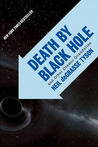
Death by Black Hole

Death by Black HoleDeath by Black Hole by Neil deGrasse Tyson
My rating: 2 of 5 stars

I wanted to like this book. I love reading popular science books. Up to the point where I read this book, Neil DeGrasse Tyson had seemed interesting and amusing when I saw him being interviewed. I should note that this isn't really an original book, but instead a collection of previously published essays, but that didn't bother me either, as I have enjoyed several of those.

But then, as I read the book, I kept coming across errors or, if I'm being more generous in some cases, over-simplifications or badly written or confusing passages. You can say that a lot of them don't matter (like saying that that the names of the days of the week come from the seven "planetes" (wonderers) that the Greek knew about. Except that in English, it is more complicated than that. Sunday is obviously from the Sun. Monday is from the Moon. Tuesday is from Tyr, a Norse god. Wednesday is from Woden, a Norse God. Thursday is from Thor, as Norse god. Friday is from Frieda, a Norse godess. Saturday is from Saturn. So, three out of seven.

Or when his "proof" that you should avoid gamma rays is The Hulk: ("Gamma rays are the sort of radiation you should avoid. Want proof? Just remember how the comic strip character 'The Hulk' became big, green, and ugly.") That is proof?

Another frustrating thing to me is his frequent correction of misunderstandings, where he is taking something literally that is not meant to be taken as literal, and then basking in his intelligence as he corrects those who are misunderstanding the world.

Like saying "those who say 'What goes up must come down!' are misinformed" because the escape velocity of the Earth is 11 km/sec.

Or "A compass points north" (because it points south too, dummies!).

Or "days get longer in the summer and shorter in the winter" (because summer doesn't officially start until the longest day of year, and really, I think that this is a cheat, since most people say "days are longer is summer", not get longer).

Or "the sun rises in the east and sets in the west" (because it is only exactly east and west twice a year).

It is as if someone so smart doesn't understand that people speak in conversational shorthand. These statements are all true in the sense in which people use them in everyday conversation.

An example of the writing problems are sentences like "Isaac Newton passed white light through a prism to produce the now-familiar spectrum of seven colors: red, orange, yellow, green, blue, indigo, and violet, which he personally named. (Feel free to call them Roy G. Biv.)" I don't know how else to read that but that he is saying that Newton either named these seven colors or that he named violet, which is ridiculous. It turns out that he means that Newton decided that the spectrum was made up of these seven colors (because of 7 musical notes and 7 days of the week) and the first to apply the Latin word spectrum to that range of colors.

Or when he repeats the easily disproven notion that most dust is made up of human skin.

Or that he thinks Al Magest is Arabic for "The Greatest" (Akbar is "greatest" in Arabic).

Or the sentence "At this time in the life of a cloud, astrophysicists can only gesticulate what happens next." I don't think that word means what you think it means.

The biggest problems come when he writes about history or religion, which he plainly knows very little about. It becomes clear late in the book what the problem is. He has apparently been taught that the "Conflict Thesis" (i.e. that religion and science are in conflict, always have been, and always will be) is the correct interpretation the world. More about why that is wrong in a minute, but first, lets look at his misunderstandings of history.

First, somewhat ironically if you actually know the history, his recounting that Board of Longitude's sought for a chronometer to determine longitude. Actually the scientists on the board hated Harrison's chronometer and avoided giving him the prize money that he had earned, because they wanted a scientific method of determining the measurement, not a device from a simple mechanic. So here we have a scientist praising scientists for seeking for something that they didn't look for and didn't want, because he believes that scientist are seekers after truth, so they must be motivated out of goodness, when the opposite was what really happened.

Or that Galileo's observations in support of the heliocentric model "shook Christendom" (in case you don't know, it wasn't the extremely religious clergy who disliked heliocentrism, it was the Aristotelians scholars - it wasn't the fact that the theory contradicted the Bible, it was that it contradicted Aristotle). The church didn't really care about what he was doing, because Christianity isn't based on astronomical facts. Galileo was allowed to teach heliocentrism to his students and the first book he wrote on the subject was widely praised. It was only later when he got involved in religion and insulting the pope, and when he insulted those who pointed out the scientific problems* with the theory that he got into trouble.

Or when he says "The Bible says the stars don't change" despite the most famous star (the Bethlehem star) in the Bible is famous because a) it was a new star and b) it "went on before them" (i.e. it moved and the wise men followed it). I'd be interested to see what he is talking about. I looked up every verse in the Bible that mentions stars and couldn't find one verse about them not moving.

He says that we have "no record of anybody in all of Europe recording" the 1054 supernova, because the Church denied that such things could happen (i.e. new stars). First, the claim that no European recorded the event is disputed. But even if it is so, other supernovae in the Middle Ages where recorded in Europe, so what this one being missed says about the Christianity and the Church isn't clear. He wants it to prove that Christianity was holding back science. That seems more than a bit of a stretch. Plus, he says that "Middle Eastern astronomers" wrote about, but the only citation that I can find is to one Nestorian Christian doctor who blamed a plague on the event.

Tyson clearly believes that the Conflict Thesis is correct. He quotes approvingly from Andrew D. White's book "A History of the Warfare of Science with Theology in Christendom" (1896). The problem is that no serious historian of science thinks that White's book is good history or that the Conflict Thesis is correct. For example, White's book is the primary source of the belief that people believed in a flat Earth before Columbus. He included as many stories, dubious or not, in the book as he could find it helped promote his ideology.

Needless to say, if you only look for evidence that proves you are right and don't care if the evidence is true, you will find plenty of evidence to support you. Stephen Jay Gould perhaps best explained when he noted "White's and Draper's [the other great instigator of the thesis] accounts of the actual interaction between science and religion in Western history do not differ greatly. Both tell a tale of bright progress continually sparked by science. And both develop and use the same myths to support their narrative". It is frankly bizarre that a person of his intellect is still relying on a book more than 100 years old for his information.

I have to say reading this book, with its many errors and biases has soured me on Tyson. And when I see him opening his series Cosmos with the Giorano Bruno story as if he was burned at the stake for his scientific inquiries, it is clear that nothing since this book was written has changed.

*The biggest problem with the theory, at that time, was that there was no measurable parallax with the stars. This meant that the stars would have had to be unbelievably far away (for the understanding of the universe at that time). It wasn't until the 19th Century that measurements were precise enough to overcome this problem.

View all my reviews

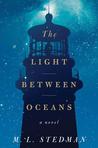
The Light Between Oceans

The Light Between OceansThe Light Between Oceans by M.L. Stedman
My rating: 2 of 5 stars

There is a lot of good about this book. For large sections, it is beautifully written. At times it is genuinely moving. The main characters are interesting and the author does a good job of explaining their motivations.

The part I love the most about this book is the way that the author captures the lives of men and women who endure hardships and risk their lives to make everyone else's lives possible (in this case, lighthouse keepers, but the same could be said of many neglected professions).

And then, everything is ruined when...

Spoilers below

--------------------------------------------------------------------------

The couple steal a baby, and from the point of view of the book, you are clearly supposed to feel sympathetic to these people despite this horrible act. It would be one thing if the book told how these two were driven to commit this crime and explained their motivation (which it does). But that isn't all. Everything in the book is trying to drive you to feel like they are the heroes of the situation. From that point on, the book is morally repulsive.

The much more minor problem, it seems to me, is the piling up of coincidences that make the plot possible. After a while they became too much for me, but in another novel that didn't have the other problem I'd probably been willing to overlook them.

Two stars for the writing and the focus on the forgotten.

View all my reviews

Back to Our Future

Back to Our Future: How the 1980s Explain the World We Live in Now--Our Culture, Our Politics, Our EverythingBack to Our Future: How the 1980s Explain the World We Live in Now--Our Culture, Our Politics, Our Everything by David Sirota
My rating: 2 of 5 stars

As someone whose formative years (13-22) occurred during the 80s, I was really looking forward to this book. It was chosen by my book club, but think that I would have picked it anyway, as its topic is so interesting to me.

However, when I read the book, I was very disappointed. It really isn't a history of the 80s at all, nor is it about the time period from 1980-1989. The author is quite liberal, and the whole point of the book is to make his points about politics, some of which I agree with (presidents have too much power, the US has become too militaristic), and some I don't (republicans are evil). He tries to show how pop culture illustrates and reinforces these points.

I'm not going to argue for or against his political positions. My problem with the book is that the author makes frequent factual mistakes about these pop culture references.

For example, he says that the name of the robotic character on Buck Rogers in the 25th Century (1979-81) was Twiggy. It was Twiki. You might say this is a small point, but a simple visit to Wikipedia would have pointed it out.

He claims that culture only started to view "government is evil or incompetent" in the 80s with movies like First Blood. Hardly. This view was quite common in films of 60s and especially 70s (e.g. Jaws, the mayor refuses to close the beaches). Nearly all CIA agents or local law enforcement in films of that era were walking evil.

He approvingly quotes the Baltimore Sun as saying that Family Ties was about "rejecting the counterculture of the 1960s and embracing the wealth and power that came to define the ’80s". This is so wrong. The show (created by an ex-hippie) was about the reversal of the normal generation gap, with the parents as the focus. But audiences loved the kids, especially Michael J. Fox, so the shows focus changed. But the writers still made Fox's character and his opinions the butt of most of the jokes, and the parents' views were never mocked in the same way. President Reagan loved the show and offered to appear on it; the writers and creator hated him and refused to include him. (http://www.museum.tv/eotv/familyties.htm)

He says that the marketing of the 50s generation as a concept was new to the 80s. What about Happy Days, Laverne and Shirley, American Graffiti, the novels of S.E. Hinton or Sha Na Na?

He says that Animal House is a celebration of 50s values. Has he ever seen the movie?

He says that Witness is about the contrast of the dangers of the racially diverse inner-city contrasted with the virtues of the all white Amish community. For the record, Witness had three villians, two were white and one was black.

He claims that Superman was fighting feminism in Superman II, because one of the villains was emblematic of women's empowerment.

He claims that prior to the album An Innocent Man, Billy Joel was a folk singer.

He claims that during the 1992 presidental election, Saturday Night Live was "quite literally, satirizing [Bill Clinton] as a tie-dyed hippie". You can see this skit for yourself here https://www.youtube.com/watch?v=bQdDi.... It seems obvious that the point is that this is how Bush sees Clinton and Bush is being mocked for doing so.

He says that "Since the 1980s, our politics have focused solely on the president, and both parties have vested more and more power in the executive branch...", which is true, as far as it goes, but this process started long before the 80s. The term "imperial presidency" was first used in the 60s, and the increasing power of the presidency in comparison to the other branches has been ongoing since at least World War I, if not longer.

He says that militarism has increased because of the "martial messaging [that] was aided and abetted by Hollywood hits such as An Officer and a Gentleman, Stripes, and Spies Like Us". I have no idea how one can say that Stripes is a pro-military movie. Spies Like Us isn't about the military, but spies. An Officer and a Gentleman is, I'd argue, pretty well-balanced about the good and the bad of military life.

He says that the self-improvement genre started in the 1982 with M. Scott Peck's The Road Less Traveled. Hardly. De Tocqueville noted the American penchant for self-improvement. The biggest self-improvement book of all time is probably How to Win Friends and Influence People, from 1936. The 70s were filled with pop-psychology books like I'm Ok, You're Ok, as well as programs like EST that were so ubiquitous that they were being mocked in movies like North Dallas Forty.

He says that He-Man and Star Wars are militaristic. That is nuts.

He claims that Andre the Giant was a "lumbering Eastern Bloc monster". He was French.

He says that "the wild-eyed Egyptian cult" of Young Sherlock Holmes is an example of Islamophobia. This cult is lead by a white Englishman and worships a pre-Islamic deity.

He says that in the Star Trek films of the 80s , the Klingons are Arab effigies. I literally have no idea what he is talking about. I've been a ST fan since 1973, and I've never heard anyone ever suggest an Arab-Klingon connection. The only other time I have seen this argument made was at the satire page of Landover Baptist Church.

He says that the view of Magic Johnson was one of an "angry, showy-but-undisciplined, overtalented-but-underachieving" player. Magic Johnson angry? What is this guy talking about?

This book reminded me of a Ann Coulter book. If you already share the author's opinions, you'll probably like it. If not, then it will only make you think that he doesn't know what he is talking about.

View all my reviews

How Not to Be a Boy

How Not To Be a BoyHow Not To Be a Boy by Robert Webb
My rating: 3 of 5 stars

As an American, I only really knew of Webb from the shows Peep Show and That Mitchell and Webb Look. If you haven't ever seen any of him and his comedy partner David Mitchell, do yourself a favor and run out and do so. But you are probably only interested in this book if you already know who he is.

Apparently in the UK he is known to be a prominent online political activist, and this book is pretty full of his ideological beliefs (atheism, left Labour and ardent feminism) and how that has helped him deal with the problems that he faced growing up. Which is fine for me, I actually enjoy hearing about how and why people think the way they do, especially those who have different opinions than me. But in the marketing for the book, there is no warning that you are going to get all that dumped on you, so some might find that off-putting. And, if for example, he was an MRA or a Christian, I think that you would have gotten a bit more a sense that that was coming in the description.

The parts about feminism are not really interesting, especially not if you have done any reading in this area already. If you really want to read about feminist theory, there are better places than this. Webb's philosophy boils down to "If it is bad, that is the patriarchy" (or 'The Trick', as he calls it). Logically it would seem to me that something that is responsible for everything is meaningless, but your mileage may vary. He quotes approvingly from scholars like Cordelia Fine, but doesn't really seem to have done much research or seriously anyone who disagrees with him.

The parts about his life, the struggles to deal with his parents' stormy marriage and divorce, his father's abuse, his mother's death and his learning to be a man and not a boy are by far the best part of the book. Webb reads the material himself and does a very good job.

Overall I enjoyed the book and felt like I learned about Webb's life, which would be the point of an autobiography. So three stars overall

View all my reviews